Google Ads Daily Budget: Understanding How Budget Management Really Works
Setting your Google Ads budget seems simple—just enter how much you want to spend per day, right? Not quite. At Addeb Solution, we’ve seen countless advertisers confused by unexpected spending patterns because they didn’t understand how Google’s daily budget system actually works. This guide demystifies Google Ads budget management and helps you set realistic expectations for your campaign spending.
How Google’s Daily Budget Actually Works
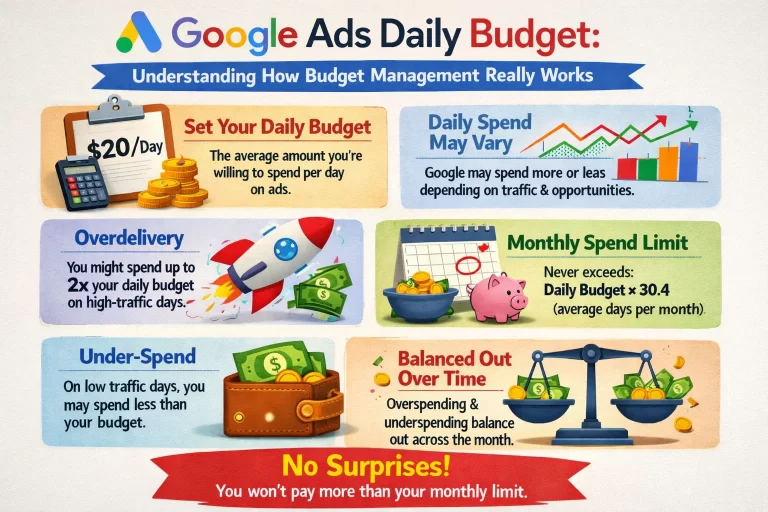
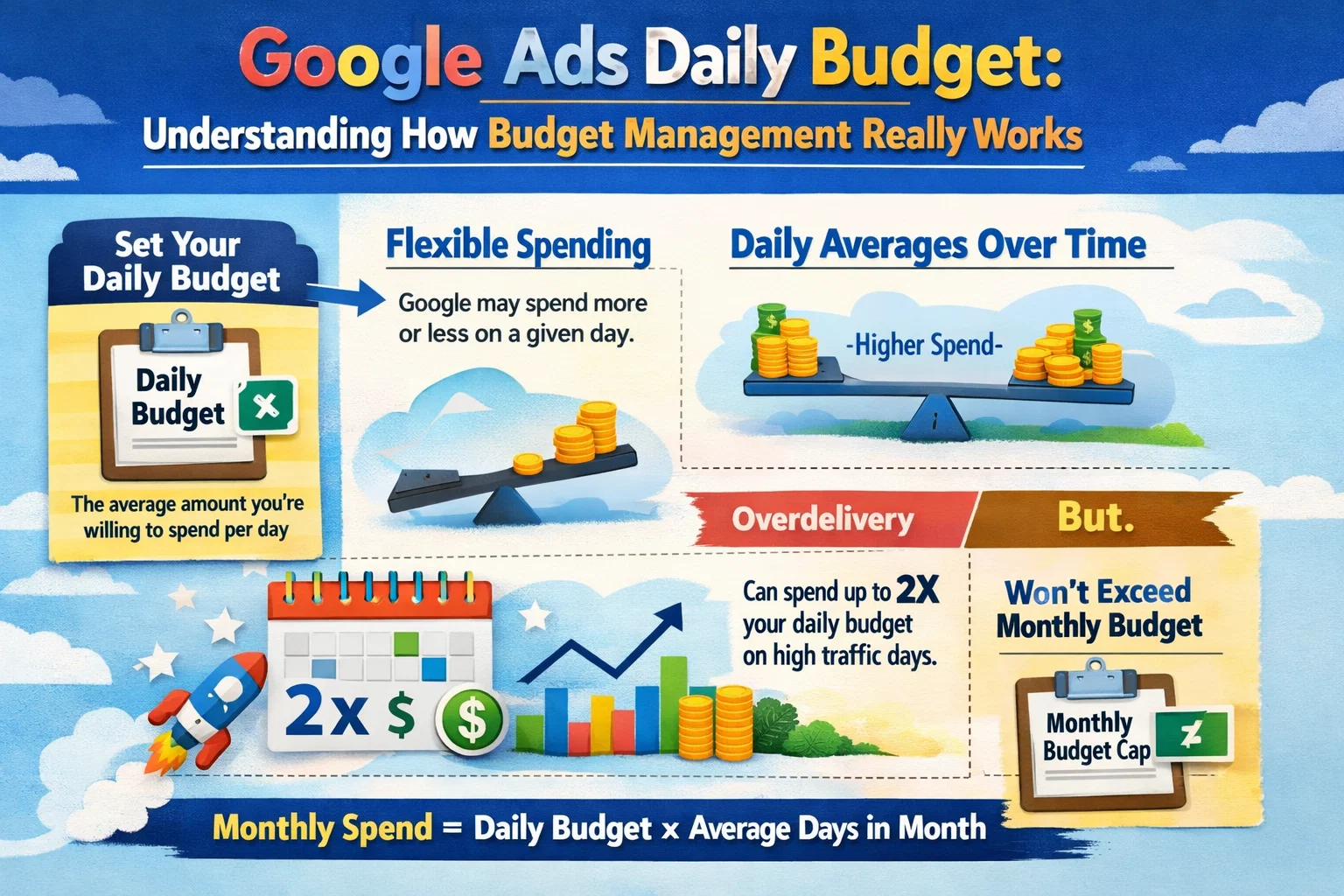
Here’s the surprise: Google calculates your spending on a monthly basis, not a daily one. According to Google’s own documentation: “For the month, you won’t pay more than your daily budget times the average number of days in a month. Some days you might spend less than your daily budget, and on others you might spend up to twice as much.”
Google uses 30.4 as the average number of days in a month. This means your true monthly spending cap is:
Monthly Spending Cap = Daily Budget × 30.4
For example, if you set a $10 daily budget, your maximum monthly spending would be $10 × 30.4 = $304. Google guarantees you’ll never exceed this amount, even if daily spending fluctuates.
Understanding Under-Delivery and Over-Delivery
Your actual daily spend can vary dramatically from your set budget, and this is intentional system design.
Under-Delivery: On some days, Google may spend as little as half your daily budget. This happens when the AI predicts poor performance based on user behavior patterns, competitive landscape changes, or seasonal factors. Rather than wasting your budget during low-opportunity periods, Google conserves it for better days.
Over-Delivery: On other days, Google may spend up to twice your daily budget. This occurs when the algorithm identifies exceptional opportunities—a particularly relevant audience segment, decreased competitor activity, or peak seasonal interest. Google capitalizes on favorable conditions by increasing spending to maximize your results.
Why Google Does This
Google’s interests align with yours. When your campaigns succeed, you scale your budget, which means more revenue for Google. Additionally, delivering relevant products to users maintains the positive experience Google prioritizes. By optimizing when to spend your budget, Google ensures efficient resource allocation that benefits everyone.
This flexible system protects you from wasted spending during poor conditions while maximizing opportunities during favorable ones.
Calculating Your Daily Budget from Monthly Spending
If you have a fixed monthly advertising budget, use this reverse calculation:
Daily Budget = Monthly Budget ÷ 30.4
For example, with a $500 monthly budget: $500 ÷ 30.4 = $16.45 daily budget. This guarantees you’ll never exceed $500 monthly, even with daily fluctuations.
Google’s Spending Guarantee
If Google ever charges you more than your calculated monthly cap (daily budget × 30.4), you won’t pay for the excess. Google absorbs the cost. While rare, this guarantee provides valuable peace of mind.
Recommended Starting Budgets
At Addeb Solution, we provide these guidelines based on your situation:
Minimum Budget: $5/day – The absolute minimum for generating meaningful data. This provides approximately $152 monthly spending, workable for very low-priced products or extremely limited budgets.
Optimal Budget: $50/day – If resources permit, this dramatically accelerates data collection and learning, translating to approximately $1,520 monthly. This shortens your path to profitability by weeks.
Sweet Spot: $15-20/day – For most businesses, this range provides meaningful traffic volume without excessive investment. A $15 daily budget yields approximately $456 monthly—sufficient to reach the 15-conversion threshold within 2-4 weeks for products with reasonable market fit.
Critical Mindset: Budget as Investment
View your initial advertising budget as an investment in algorithm training and data collection, not expected immediate profit. Your initial spending, especially during the Maximize Clicks phase, should be money you can afford to lose.
You’re paying for education: teaching Google’s algorithm about your business, gathering data about your market, and learning which strategies work. Advertising is costly during the learning phase. Profitability builds over time as optimization improves.
Budget Adjustment Best Practices
Once your campaign is running, follow these practices:
- Allow Learning Time: Give the algorithm 3-7 days to adapt before making adjustments
- Make Gradual Changes: Increase budgets by 20-30% at a time, not dramatic jumps
- Scale Based on Performance: Only increase budgets when ROAS meets or exceeds targets
- Monitor Impression Share: Low impression share may indicate budget constraints limiting reach
Common Budget Mistakes to Avoid
Setting Budget Too Low for Product Price: Ensure budgets align with product economics. If your product costs $100 and your daily budget is $5, you need unrealistic conversion rates to break even.
Panicking Over Daily Fluctuations: Budget management operates monthly. Daily variations are normal and expected.
Changing Budgets Too Frequently: Constant adjustment prevents algorithm stabilization.
Expecting Immediate Profitability: Initial spending is investment. Profitability develops over time.
Conclusion
Google’s daily budget system operates on monthly calculations with daily flexibility. Your true spending cap is daily budget × 30.4, with daily spending ranging from 50% to 200% of your set amount. These fluctuations reflect Google’s optimization of spending timing, and you’re protected against monthly overages.
At Addeb Solution, we recommend starting with at least $15 daily budget for meaningful results, treating initial spending as investment rather than expecting immediate profit, and maintaining patience as campaigns optimize. Set budgets you can sustain during the learning phase, calculate your true monthly exposure, and allow time for data accumulation and optimization necessary for long-term profitability.