
Google Ads Keyword Research for Campaigns with Keyword Planner
Keyword research is the foundation of any successful Google Ads campaign. Without the right keywords, you’re essentially throwing money at the wrong audience. But here’s the good news: effective keyword research doesn’t have to be complicated. In fact, the most powerful approach might surprise you with its simplicity.
In this comprehensive guide, I’ll walk you through a proven keyword research method that focuses on user intention rather than just data points—helping you find high-quality leads that actually convert into sales.
Why Keyword Research Matters More Than Ever
Before diving into the methodology, let’s understand why this matters. Many advertisers make the mistake of chasing high search volumes without considering lead quality. They end up with plenty of clicks but few conversions. The truth is, it’s not about getting as many leads as possible—it’s about getting high-quality leads that eventually lead to sales.
Quality leads are what make your campaigns profitable and allow you to scale your business to the next level.
Getting Started: Accessing Google’s Keyword Planner
The first step in your keyword research journey begins in your Google Ads dashboard. Here’s how to access the tool:
- Navigate to the left sidebar and click on Tools
- Go to Planning
- Select Keyword Planner
- Click on Discover New Keywords
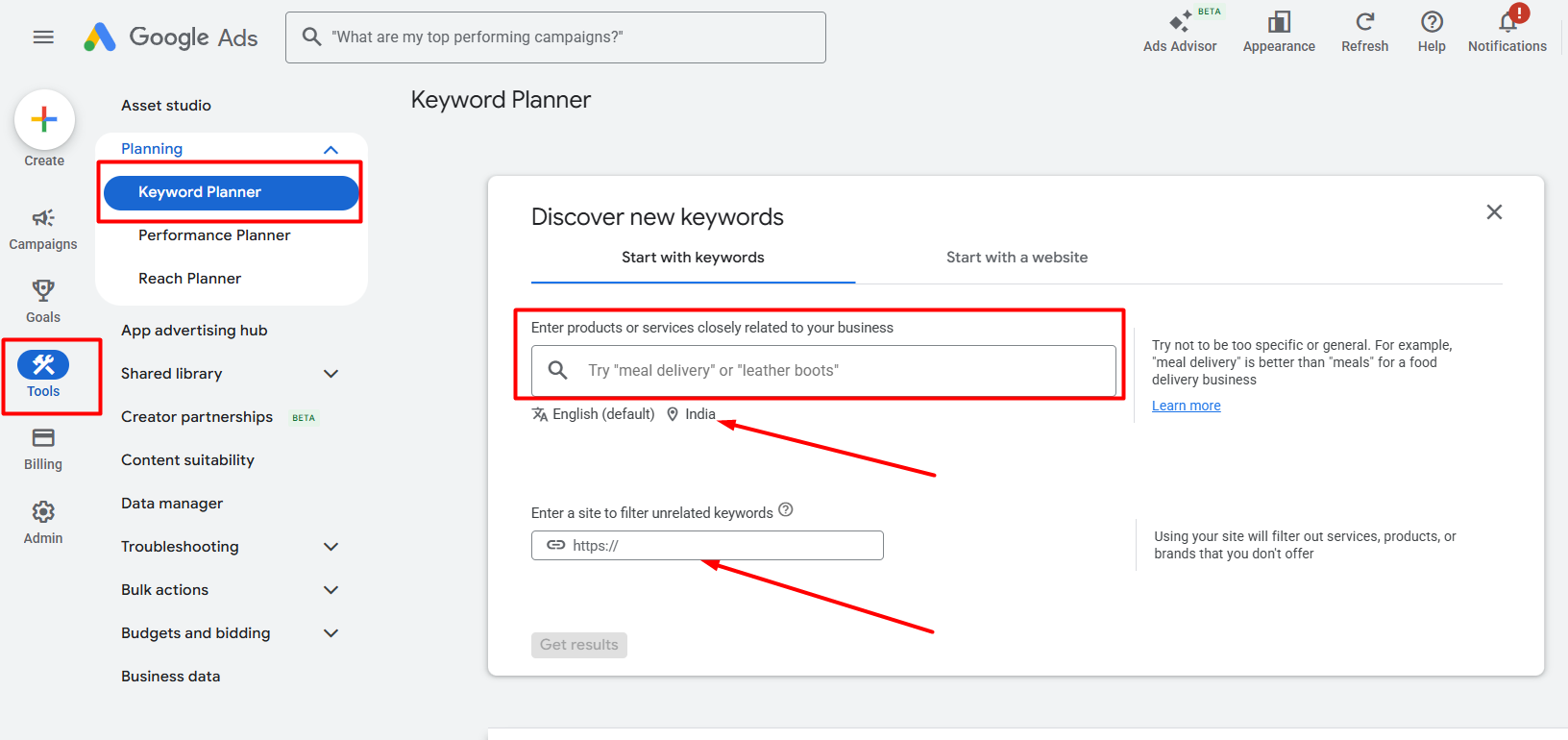
This is where the magic happens.
The Critical First Step: Setting Your Target Location
One of the most common mistakes advertisers make is overlooking their targeting location settings. By default, Google sets your targeting location to wherever you are or where you set up your account. This can lead to completely irrelevant keyword data.
You must change your targeting location to where you plan on showing your ads. This ensures you get keyword ideas, bidding information, and search volume data specific to your target market.
The “Big Six” English-Speaking Markets
For many digital products and services, targeting the six main English-speaking countries can yield exceptional results. These markets, known as “the big six,” include:
- United States
- United Kingdom
- Canada
- Australia
- New Zealand
- Ireland
These countries typically provide high-quality leads based on proven data. However, your target markets may differ based on your specific offer and existing customer data.
While you could target developing countries and potentially get more leads for less money, always prioritize lead quality over quantity. Low-cost leads that don’t convert are worthless.
The Heart of the Method: Intention-Based Keyword Research
Here’s where the approach differs from traditional keyword research. Instead of getting lost in complex data analysis and endless keyword lists, we’re going to use a surprisingly simple yet effective strategy:
Write in the keywords that YOU would use to find your own product or offer.
Yes, it’s that simple. This method works because it focuses on user intention rather than just matching exact keywords. Google’s algorithm has become sophisticated enough to understand search intent, so starting with natural, relevant keywords is more effective than ever.
How to Input Your Keywords
When entering keywords into the Keyword Planner:
- Type your keyword
- Add a comma
- Hit space
- Repeat for additional keywords
Don’t worry about adding just one keyword or ten—add as many as needed to help Google understand the intention behind your offer. You can always remove keywords by clicking them away if needed.
For example, if you’re promoting a digital marketing course, you might start with keywords like:
- Best digital marketing course
- Online marketing certificate
- Digital marketing training programs
- Professional marketing courses online
Analyzing Your Keyword Results
After clicking “Get Results,” you’ll see a wealth of data. By default, Google shows only ten rows, but you’ll want to increase this to at least 100 to see more options.
Understanding Average Monthly Searches
You can sort results by “Average Monthly Searches” to see the most popular keywords. However, here’s an important insight: the exact search volume numbers aren’t as critical as you might think.
Why? Because Google doesn’t just target your exact keyword—it targets various iterations and different user intentions related to that keyword. The other variations might have vastly different search volumes, making the single number less meaningful than the overall theme.
Selecting Your Long-Tail Keywords
Now comes the selection process. Your goal is to find 3 to 4 broad keywords that contain at least four words each. These are called long-tail keywords, and they’re incredibly valuable because they:
- Have clearer user intent
- Face less competition
- Attract more qualified leads
- Often have higher conversion rates
Example Long-Tail Keywords:
- “Best online marketing courses”
- “Marketing certificate programs online”
- “Digital marketing course with certificate”
- “Social media marketing courses with certificates”
The Quality Lead Principle: Avoid the “Free” Trap
Here’s a critical lesson that can save you thousands of dollars: be careful about targeting keywords with “free” in them.
While you might be offering a free introductory course, targeting people specifically searching for “free digital marketing classes” can backfire. Why? Because people searching exclusively for free options are less likely to purchase your full course later.
This results in low-quality leads that don’t move through your sales funnel effectively. Instead, target people looking to learn digital marketing in general—they’ll discover your free offer and, if it provides value, will be more likely to invest in the complete course.
Organizing Your Keyword Data for Success
Once you’ve selected your keywords, click “Add Keywords to Create Plan” and then download your keyword list. You can download to either:
- Google Sheets (recommended for easy collaboration and organization)
- CSV file (for offline access)
Cleaning Up Your Data
Your downloaded file will contain lots of unnecessary information. Here’s how to streamline it:
- Remove irrelevant columns like currency data and redundant metrics
- Keep essential data: Keywords, Average Monthly Searches, and Max CPC (Cost Per Click)
- Format for readability: Make columns wider, bold headers, and organize clearly
Why Max CPC Matters
The Max CPC bid shows how much the highest bidder is paying to rank at the top for that keyword. This data is invaluable when setting your advertising budget later in the campaign setup process.
Creating a Scalable Organization System
To prepare for long-term success, organize your keywords by themes. This allows you to:
- Create separate ad groups for different keyword themes
- Add new keywords easily as your campaigns grow
- Track performance across different audience intentions
Example Organization:
Theme: Online Courses
- Best online marketing courses
- Marketing certificate programs online
- Digital marketing course with certificate
- Social media marketing courses with certificates
Theme: Career Change
- (Add relevant keywords here)
Theme: Professional Development
- (Add relevant keywords here)
This organizational structure keeps everything clean and makes it easy to expand your campaigns over time.
Key Takeaways for Effective Keyword Research
Let’s recap the essential principles:
- Always set your targeting location correctly before researching keywords
- Focus on intention rather than just search volume numbers
- Target long-tail keywords with at least four words for better quality leads
- Avoid “free” keywords unless your business model specifically caters to that audience
- Prioritize lead quality over quantity in every decision
- Organize keywords by theme for scalable campaign management
- Keep Max CPC data to inform your budget decisions
Moving Forward: From Research to Campaign
With your keyword research complete and properly organized, you’re now ready to move into the campaign setup phase. You have:
- 3-4 carefully selected long-tail keywords
- Search volume data for context
- Max CPC information for budget planning
- A scalable organization system for future growth
This foundation sets you up for creating Google Ads campaigns that don’t just generate clicks—they generate qualified leads who are genuinely interested in your offer and ready to convert.
Final Thoughts
The beauty of this keyword research method lies in its simplicity and focus on what really matters: connecting with people who have the right intention. By thinking like your customer and selecting keywords based on how real people search for solutions like yours, you create campaigns that resonate and convert.
Remember, successful Google Ads campaigns aren’t built on having the most keywords or the highest search volumes—they’re built on understanding your audience and reaching them with the right message at the right time.
Now that you have the keyword research foundation in place, you’re ready to build campaigns that scale profitably and deliver real business results.
Ready to take your Google Ads to the next level? Start by implementing this keyword research method today, and watch how focusing on quality over quantity transforms your campaign performance.