Is $10 a Day Good for Facebook Ads
Table of Contents
- Understanding Facebook Ads Daily Budget
- Is $10 a Day Enough for Facebook Ads?
- Facebook Ads Cost Breakdown
- The 3-2-2 Facebook Ads Method
- Facebook Ads vs Google Ads Budget
- How to Make Money with Facebook Ads
- Advanced Facebook Ads Budget Strategies
Understanding Facebook Ads Daily Budget
How Much Should I Budget for Facebook Ads Per Day?
When starting with Facebook advertising in 2026, your daily budget should align with your business objectives and customer lifetime value. Here’s what industry experts recommend:
Beginner Budget (Testing Phase)
- $5-$10 per day: Perfect for testing new audiences and creative content
- Allows Facebook’s algorithm to gather essential performance data
- Ideal for small businesses and entrepreneurs starting their first campaign
Intermediate Budget (Active Campaigns)
- $20-$50 per day: Best for validated offers and proven target audiences
- Suitable for small to medium businesses scaling profitable campaigns
- Provides enough data for meaningful optimization decisions
Advanced Budget (Growth Phase)
- $100+ per day: For established businesses with proven sales funnels
- Recommended when customer acquisition cost (CAC) is optimized
- Enables rapid scaling and market dominance
Pro Tip: Start with a modest Facebook ads budget and scale gradually based on performance metrics. Many successful seven-figure businesses began with just $10 daily ad spend.
How Much Do 1000 Facebook Ads Cost? (CPM Explained)
Understanding Facebook ads cost per 1000 impressions (CPM) is crucial for budget planning:
2026 Average CPM Rates
- General e-commerce: $6-$12
- B2B and professional services: $15-$30
- Finance and insurance: $20-$40
- Local services: $5-$15
Factors Affecting Your Facebook Ads CPM:
- Industry competition: Higher competition = higher costs
- Audience quality: Narrow targeting increases CPM but improves conversion
- Ad relevance score: Better ads = lower costs (30-50% savings possible)
- Seasonality: Q4 holiday season sees 2-3x higher CPMs
- Geographic targeting: US/Canada/UK audiences cost more than others
With a $10 Facebook ads daily budget, expect to reach 700-2,000 people daily, depending on your CPM rate and targeting parameters.
Is $10 a Day Enough for Facebook Ads?
Is $10 a Day Good for Facebook Ads? The Honest Answer
Yes, $10 per day can generate real results when you follow these proven strategies:
✅ What Works with $10/Day Facebook Ads
- Narrow audience targeting: Focus on 50,000-500,000 audience size
- Single campaign objective: Don’t spread budget across multiple goals
- Retargeting campaigns: Target warm audiences who know your brand
- Local business promotion: Perfect for geographically limited services
- Lead generation: Can generate 5-20 leads daily in most industries
- Email list building: Cost-effective for growing your subscriber base
❌ What Doesn’t Work with $10/Day
- Broad audience testing (1M+ people)
- Multiple campaign objectives simultaneously
- Highly competitive national markets
- Complex sales funnels requiring multiple touchpoints
- Video view campaigns without conversion focus
Real-World Results: Small businesses regularly achieve 3-5x ROAS (Return on Ad Spend) with optimized $10/day campaigns in niche markets.
Is $3 a Day Enough for Facebook Ads?
A $3 daily Facebook ads budget is at the minimum threshold for effectiveness:
Challenges with $3/Day Budget:
- Limited reach (100-300 impressions daily)
- Slower algorithm learning phase (14-21 days vs 7-14 days)
- Insufficient data for optimization
- Higher cost per result due to limited scale
When $3/Day Can Work:
- Micro-local businesses (single neighborhood targeting)
- Retargeting previous website visitors
- Testing single ad creative before scaling
- Brand awareness for established local businesses
Recommendation: If $3 is your only option, focus exclusively on retargeting campaigns where you’re reaching people already familiar with your brand.
Is $10 a Day Enough for Google Ads? Facebook vs Google Comparison
$10 daily budget comparison:
| Platform | Average Reach | Best Use Case | Typical CPC |
|---|---|---|---|
| Facebook Ads | 700-2,000 impressions | Brand awareness, visual products | $0.50-$2.00 |
| Google Ads | 2-10 clicks | High-intent searches | $2.00-$50.00 |
Verdict: Facebook ads provide better value for $10/day budgets due to:
- Lower cost per click (CPC)
- Superior targeting capabilities
- Better reach for awareness campaigns
- Visual ad formats that showcase products effectively
Google Ads with $10/day only works for:
- Long-tail, low-competition keywords
- Local service businesses (Google Local Services Ads)
- Remarketing campaigns
Facebook Ads Cost Breakdown
How Much Are Facebook Ads Per 1000 Views?
2026 Facebook Ads CPM Benchmarks by Industry:
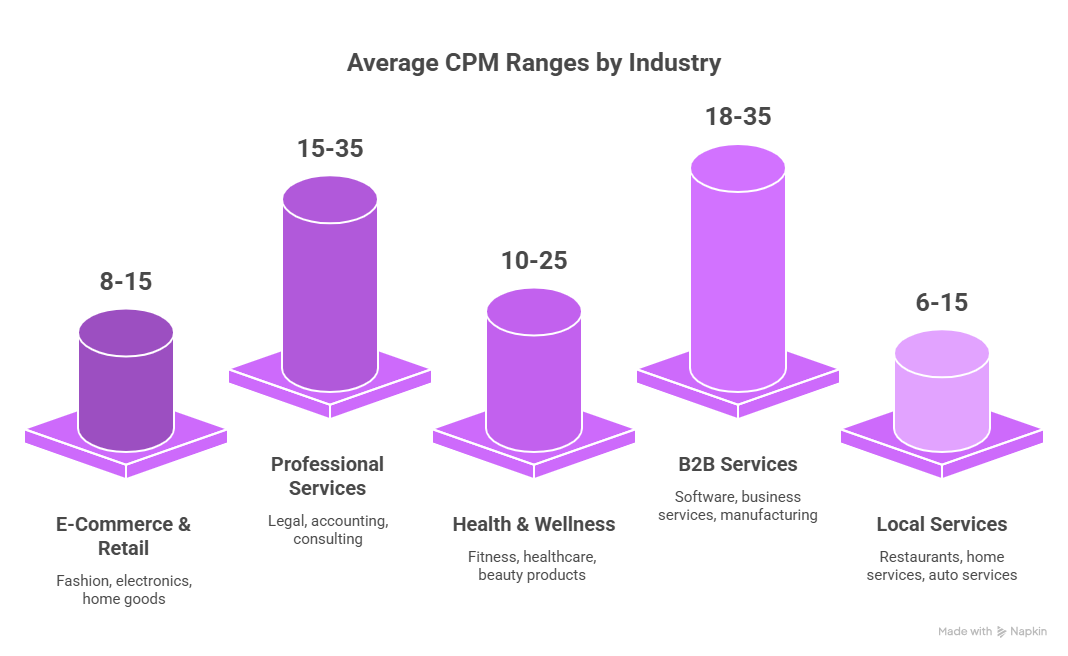
E-Commerce & Retail: $8-$15 CPM
- Fashion and apparel: $10-$18
- Electronics: $12-$20
- Home goods: $7-$14
Professional Services: $15-$35 CPM
- Legal services: $25-$40
- Accounting and finance: $20-$35
- Consulting: $15-$30
Health & Wellness: $10-$25 CPM
- Fitness: $8-$15
- Healthcare: $18-$30
- Beauty products: $10-$20
B2B Services: $18-$35 CPM
- Software/SaaS: $15-$30
- Business services: $20-$35
- Manufacturing: $18-$28
Local Services: $6-$15 CPM
- Restaurants: $6-$12
- Home services: $8-$16
- Auto services: $10-$18
How Many Ads Do We See Per Day? Understanding Ad Frequency
Daily ad exposure statistics:
- Average person sees 4,000-10,000 ads daily
- Consciously notices: 300-400 ads
- Actually engages with: 10-20 ads
- Remembers after 24 hours: 3-5 ads
Optimal Facebook Ad Frequency:
- 1-2 times/day: Ideal for cold audiences
- 3-5 times/week: Perfect for warm audiences
- 7+ times/week: Risk of ad fatigue (CTR drops 30-50%)
Pro Strategy: With a $10/day budget, focus on reaching 1,000-2,000 people multiple times rather than 10,000 people once. The Rule of 7 in marketing states prospects need 7 exposures before taking action.
Can You Make Money Watching Ads? Advertiser Perspective
While platforms pay users pennies to watch ads, this highlights a critical lesson for advertisers:
Quality over quantity: Target engaged audiences genuinely interested in your offer, not reward-seeking viewers. Facebook’s algorithm prioritizes:
- Meaningful engagement (comments, shares, saves)
- Watch time (for video ads)
- Click-through rate (CTR)
- Conversion rate
Ads with high engagement rates see 40-60% lower costs than poor-performing ads.
The 3-2-2 Facebook Ads Method
What is the 3-2-2 Method of Facebook Ads?
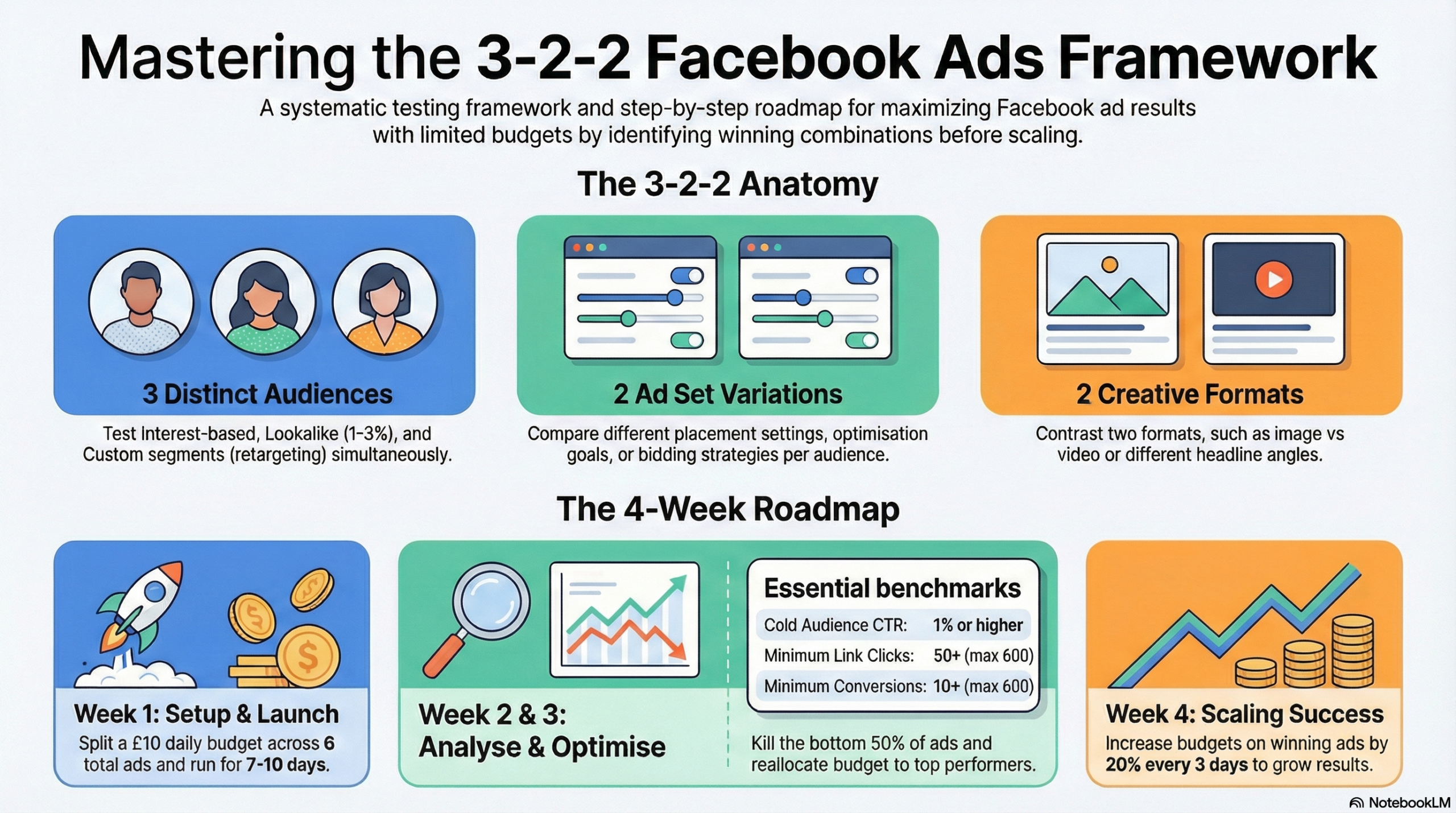
The 3-2-2 Facebook ads strategy is a systematic testing framework that maximizes results from limited budgets:
3 – Different Audiences Test three distinct audience segments:
- Interest-based audience: Target people based on interests, behaviors
- Lookalike audience: Target people similar to your customers (1-3% LAL)
- Custom audience: Retarget website visitors or email list
2 – Different Ad Sets Within each audience, create two ad sets with variations in:
- Placement optimization (automatic vs manual)
- Optimization goals (conversions vs landing page views)
- Bidding strategies (lowest cost vs cost cap)
2 – Different Creatives Test two completely different ad formats:
- Image vs video
- Carousel vs single image
- Different headlines, copy angles, or calls-to-action (CTAs)
What is the 3-2-2 Ad Strategy? Implementation Guide
Step-by-Step 3-2-2 Method for $10/Day Budget:
Week 1 – Setup & Launch
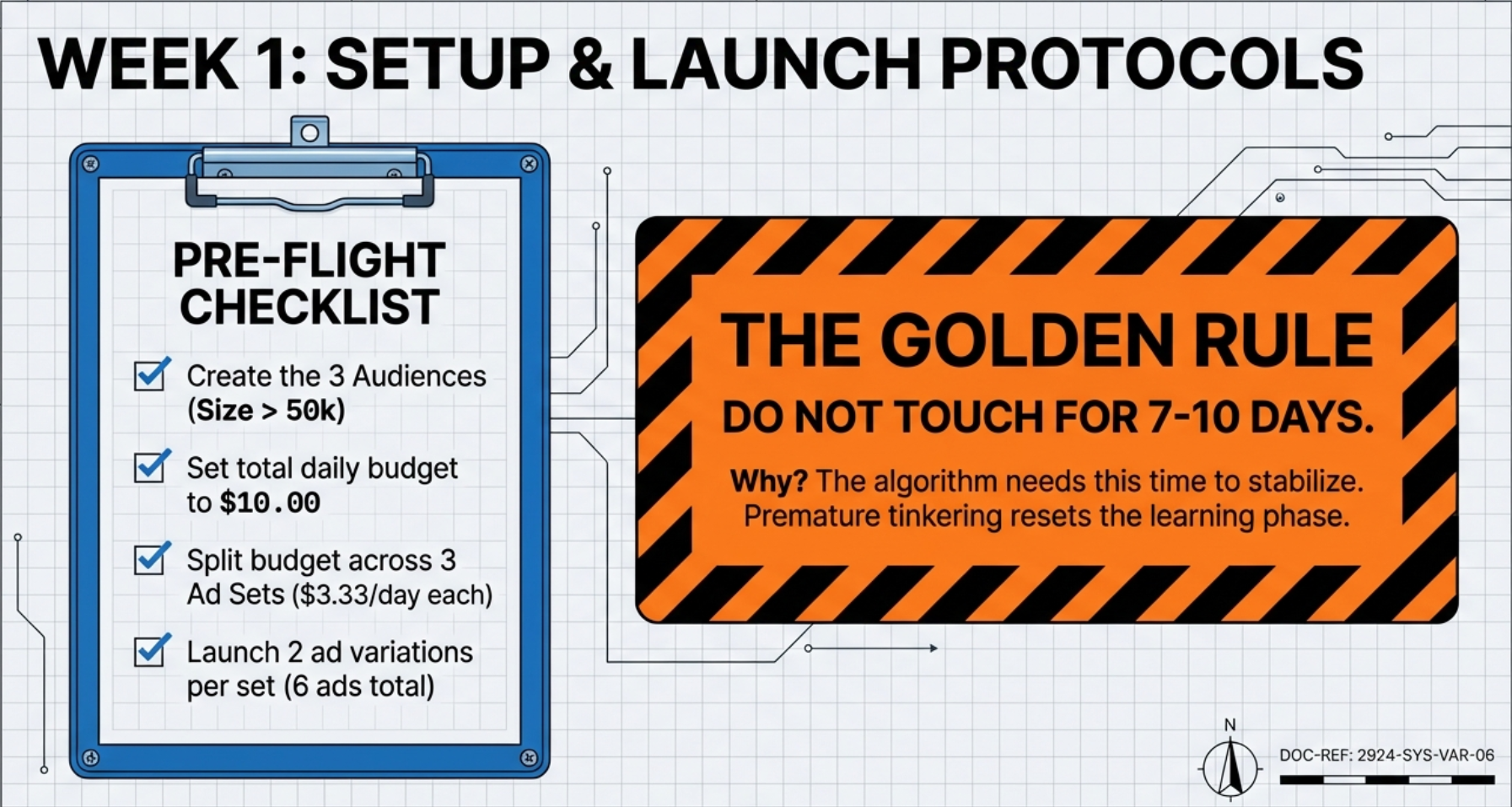
- Create 3 audiences (minimum 50k people each)
- Set daily budget to $10 split across 3 ad sets ($3.33 each)
- Launch 2 ad variations per ad set (6 total ads)
- Run for 7-10 days minimum without changes
Week 2 – Analysis Phase
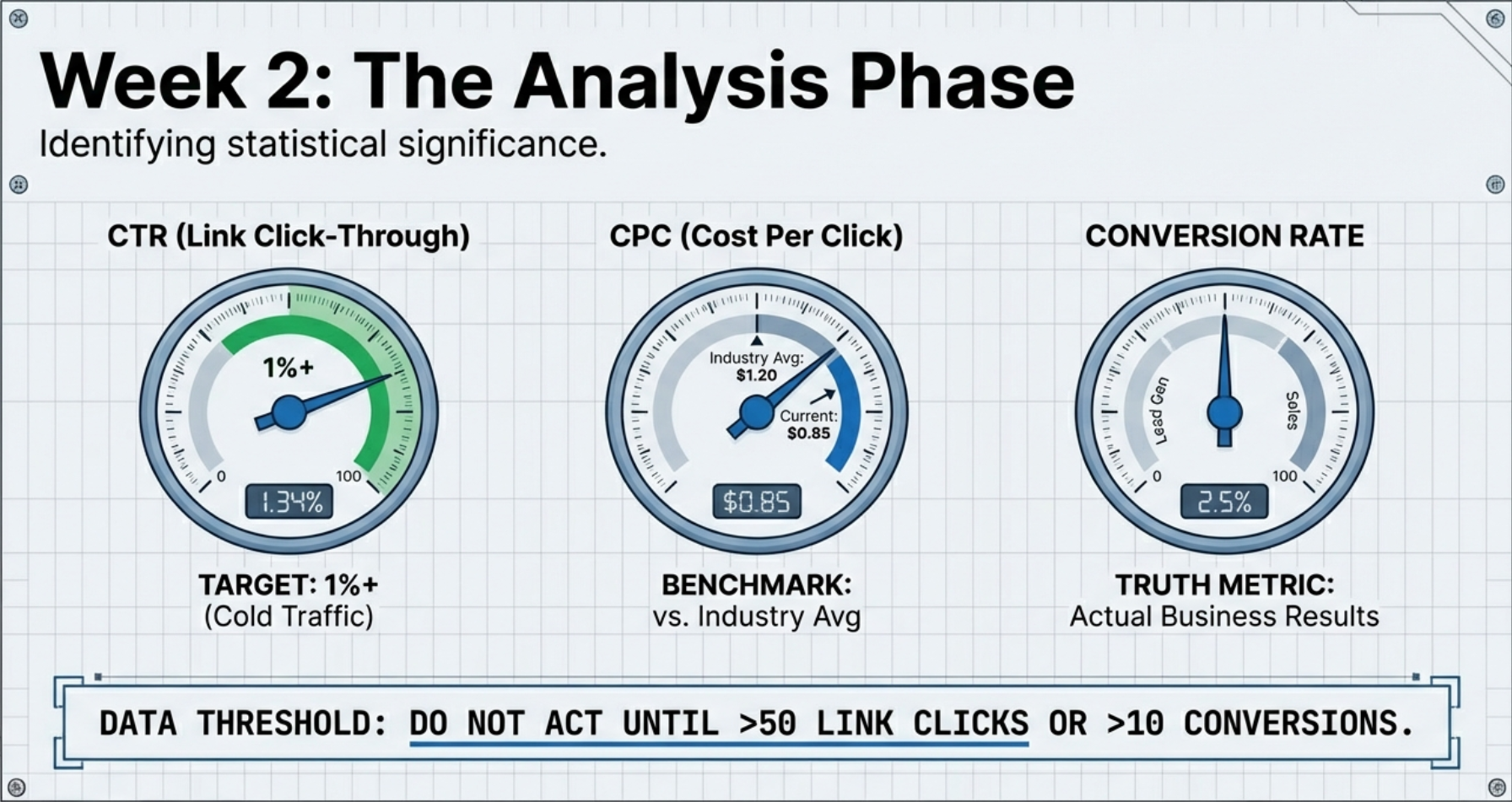
- Review key metrics:
- CTR (Click-Through Rate): Target 1%+ for cold audiences
- CPC (Cost Per Click): Compare against industry benchmarks
- Conversion rate: Track actual business results
- Identify winning combinations (audience + creative)
- Note: Need 50+ link clicks or 10+ conversions minimum for statistical significance
Week 3 – Optimization
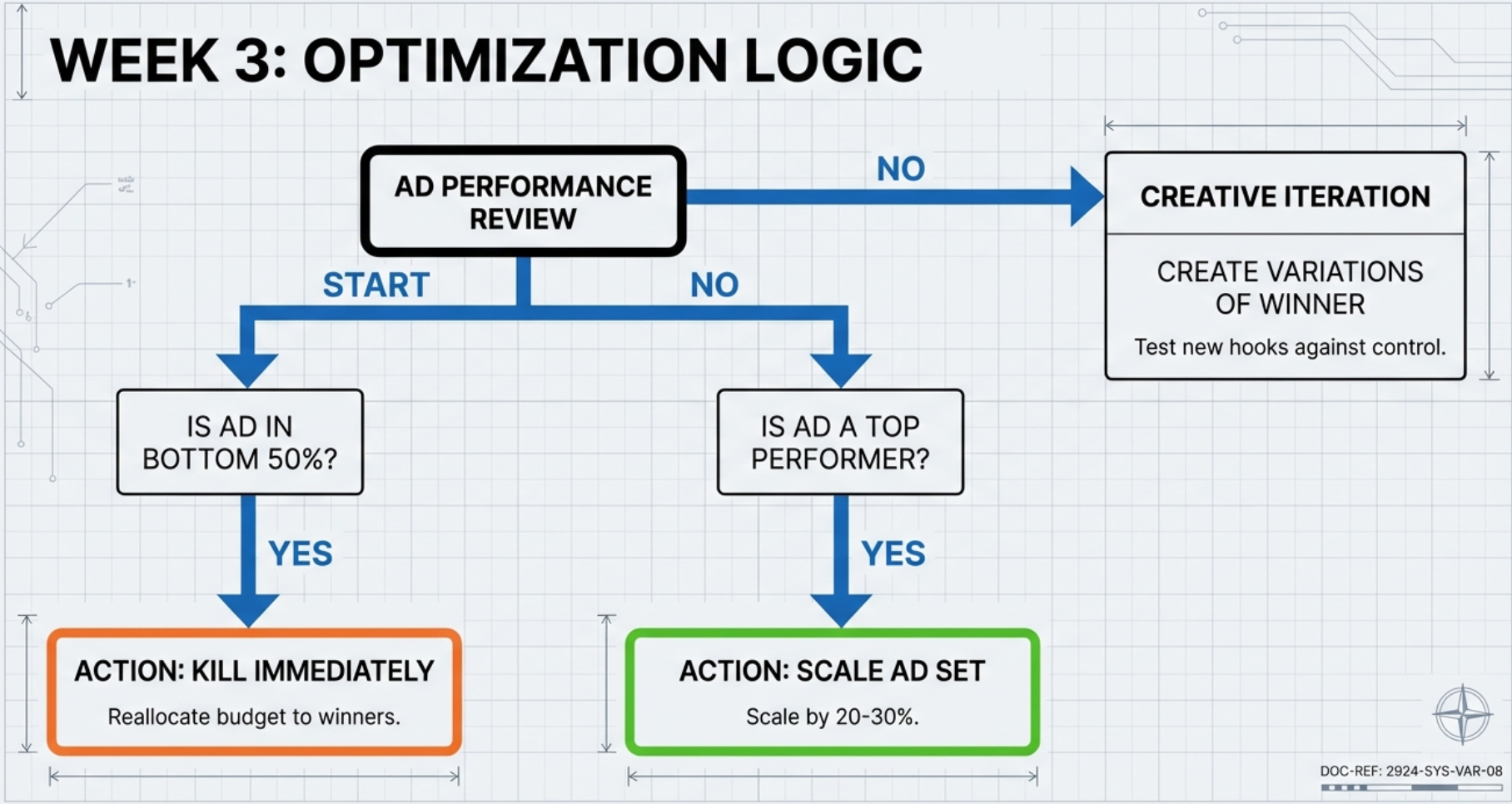
- Kill underperforming ads (bottom 50%)
- Reallocate budget to top performers
- Create new variations of winning ads
- Scale winning ad sets by 20-30%
Week 4 – Scaling
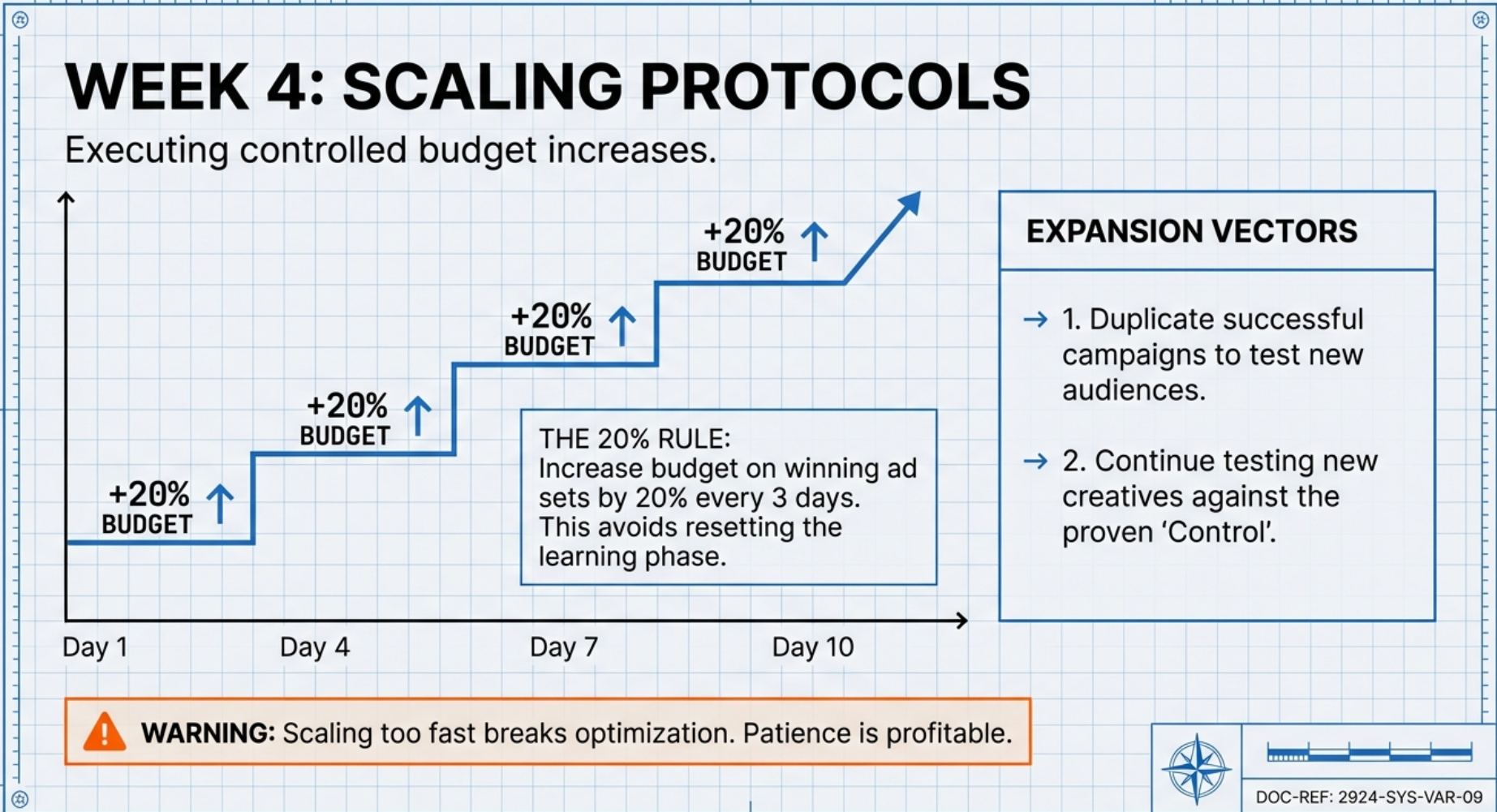
- Increase budget on winners by 20% every 3 days
- Duplicate successful campaigns to test new audiences
- Continue testing new creatives against control
What is 3-2-2 in Meta Ads?
Meta ads 3-2-2 method applies across all Meta platforms:
- Facebook News Feed and Stories
- Instagram Feed, Stories, and Reels
- Facebook Marketplace
- Audience Network
- Messenger
Cross-Platform Optimization: The 3-2-2 strategy works because it tests variables systematically across Meta’s entire ecosystem, identifying which platform, audience, and creative combination drives the best results.
Budget Allocation Tip: Let Facebook’s algorithm distribute your $10/day across placements automatically initially. Manual placement optimization requires $30+/day for sufficient data.
Facebook Ads vs Google Ads Budget
Should You Choose Facebook Ads or Google Ads with $10/Day?
Choose Facebook Ads when:
- Building brand awareness
- Targeting based on interests, behaviors, demographics
- Selling visual products (fashion, food, home goods)
- Long sales cycle requiring multiple touchpoints
- Limited budget ($3-$20/day)
Choose Google Ads when:
- Capturing high-intent searchers
- Offering emergency/urgent services
- Competing on specific keywords
- B2B with clear search terms
- Budget exceeds $50/day
Hybrid Approach (Recommended): Allocate 70% to Facebook for top-of-funnel awareness and 30% to Google for bottom-of-funnel conversions when budget allows.
How to Make Money with Facebook Ads
How Much Money Should I Put Into Facebook Ads?
Calculate your maximum Facebook ads budget using the Customer Lifetime Value (LTV) formula:
Formula: Maximum CPA = Customer LTV × 30%
Example Calculation:
- Average order value: $50
- Purchase frequency: 3 times/year
- Customer lifespan: 2 years
- Customer LTV: $50 × 3 × 2 = $300
- Maximum CPA: $300 × 0.30 = $90
With a $90 maximum CPA, you can afford to spend up to that amount to acquire each customer profitably.
Budget Recommendation by Business Stage:
Startup Phase (Testing):
- Investment: $10-$20/day ($300-$600/month)
- Goal: Find profitable audience-creative combinations
- Timeline: 30-60 days
- Success metric: Break-even or better
Growth Phase (Scaling):
- Investment: $50-$200/day ($1,500-$6,000/month)
- Goal: Scale profitable campaigns
- Timeline: 3-6 months
- Success metric: 3-5x ROAS
Maturity Phase (Domination):
- Investment: $500+/day ($15,000+/month)
- Goal: Market saturation, brand dominance
- Timeline: 6-12+ months
- Success metric: Consistent 2-4x ROAS at scale
How Much Money is Good for Facebook Ads? ROI-Based Approach
Minimum viable budget formula: Needed conversions per week ÷ Expected conversion rate × Expected CPC = Minimum weekly budget
Example:
- Need: 20 leads/week for sales team
- Expected conversion rate: 5%
- Expected CPC: $1.50
- Required clicks: 20 ÷ 0.05 = 400 clicks/week
- Weekly budget: 400 × $1.50 = $600/week
- Daily budget: $600 ÷ 7 = $85/day
Key Insight: Your Facebook ads budget should generate enough conversions (minimum 50/week) for Facebook’s algorithm to optimize effectively.
Advanced Facebook Ads Budget Strategies
What is the 7 Times 7 Rule in Marketing?
The Rule of 7 states that prospects need to encounter your brand message at least 7 times before taking action.
Applying the Rule of 7 to Facebook Ads:
Frequency Strategy for $10/Day Budget:
- Days 1-3: Reach new audience, establish awareness (Frequency: 1-2)
- Days 4-7: Reinforce message to engaged users (Frequency: 3-4)
- Days 8-14: Convert warm prospects (Frequency: 5-7)
- Day 15+: Retarget unconverted engaged users
Budget Allocation:
- 40% to cold audiences (new reach)
- 30% to warm audiences (engaged but not converted)
- 30% to retargeting (website visitors, video viewers)
Modern Update: In 2026’s saturated digital landscape, many marketers argue the “Rule of 7” is now the “Rule of 12-15” due to increased ad clutter.
Why is Facebook 90% Ads Now? Impact on Your Strategy
Facebook ad saturation reality:
- Organic reach for business pages: Less than 5% (down from 16% in 2012)
- Average user sees ads in 25-30% of feed content
- Competition for ad space: 10 million+ active advertisers
Adapting Your $10/Day Strategy:
- Create scroll-stopping content: First 3 seconds determine success
- Use native formats: Ads that look like organic content perform 30% better
- Leverage video: Video ads get 10-30% better engagement than static images
- Test multiple hooks: Your headline/opening determines 80% of performance
- Focus on value first: Educational content outperforms promotional content
Ad Quality Formula:
- Relevance score 8+: 30-50% lower costs
- Relevance score 4-7: Average costs
- Relevance score 1-3: 50-100% higher costs (kill immediately)
Facebook Ads Budget Scaling Rules
Safe scaling methodology to grow from $10/day without destroying performance:
The 20% Rule: Never increase ad set budgets by more than 20% every 3 days. Larger increases reset Facebook’s learning phase.
Example Scaling Timeline:
- Week 1: $10/day (testing)
- Week 2: $12/day (+20%)
- Week 3: $14.40/day (+20%)
- Week 4: $17.28/day (+20%)
- Week 8: $30/day
- Week 12: $50/day
Alternative: Campaign Budget Optimization (CBO): Let Facebook distribute budget across ad sets automatically. Start with $30/day minimum for CBO to work effectively.
Warning Signs of Scaling Too Fast:
- CPM increases 50%+
- CTR drops 30%+
- Conversion rate declines 20%+
- Ad frequency exceeds 4-5 per user/week
Solution: Reduce budget by 30-50% immediately and let campaign restabilize for 3-5 days.
Frequently Asked Questions (FAQ)
How much should a beginner spend on Facebook ads?
Beginners should start with $10-$15 per day for at least 30 days. This provides enough data to learn the platform, test audiences, and measure results without significant financial risk. Expect to invest $300-$450 in your learning phase.
What is a good daily budget for Facebook ads in 2026?
A good daily budget depends on your goals:
- Testing: $10-$20/day
- Active campaigns: $30-$75/day
- Scaling: $100+/day
Most small businesses find their sweet spot between $30-$50/day once they’ve validated their offer and audience.
Can you make money with Facebook ads?
Yes, thousands of businesses generate profitable returns from Facebook ads. Success requires:
- Clear understanding of customer lifetime value
- Proper conversion tracking setup
- Continuous testing and optimization
- Realistic timeline (3-6 months to profitability)
Average successful campaigns achieve 2.5-4x ROAS after the learning phase.
How many ads should I run per day with a $10 budget?
With a $10/day budget, run 2-4 ads maximum across 1-2 ad sets. Running too many ads spreads your budget too thin, preventing Facebook’s algorithm from gathering sufficient optimization data. Each ad needs at least $2-3/day minimum.
Is Facebook ads worth it for small businesses?
Yes, Facebook ads remain one of the most cost-effective advertising channels for small businesses in 2026. With precise targeting, relatively low costs, and scalable budgets, small businesses can compete effectively against larger competitors. Success rate is approximately 65% for businesses that commit to at least 90 days of consistent testing.
Final Recommendations: Making $10/Day Work
Your 30-Day Action Plan for Facebook Ads Success
Week 1: Foundation
- Install Facebook Pixel on your website
- Set up conversion tracking for key actions
- Research competitor ads using Facebook Ad Library
- Create 2-3 high-quality ad creatives
- Define your target audience (3 variations)
- Launch campaign at $10/day
Week 2: Monitoring
- Check campaign daily for technical issues
- Track key metrics: CTR, CPC, conversion rate, CPM
- Resist urge to make changes (let algorithm learn)
- Document performance in spreadsheet
- Ensure you’re getting minimum 50 link clicks
Week 3: Analysis
- Calculate actual cost per result
- Identify winning audience-creative combinations
- Pause bottom 50% performers
- Increase budget 20% on top performers
- Create new variations of winning ads
Week 4: Optimization
- Implement 3-2-2 testing framework
- Expand to new related audiences
- Test new ad formats (video, carousel)
- Plan next month’s budget based on ROI
- Consider scaling to $15-20/day if profitable
Key Success Factors
✅ Do These Things:
- Start small and scale based on data
- Track every conversion accurately
- Test systematically using 3-2-2 method
- Focus on one objective per campaign
- Give campaigns 7-14 days before judging
- Create mobile-optimized, thumb-stopping creative
- Study your best-performing competitors
❌ Avoid These Mistakes:
- Changing campaigns daily
- Running 10+ ads with $10/day
- Targeting too broadly (1M+ audiences)
- Ignoring conversion tracking
- Stopping campaigns after 3 days
- Using low-quality images or videos
- Copying competitors without testing
Conclusion: Is $10 a Day Good for Facebook Ads?
Bottom line: Yes, $10 per day is good for Facebook ads when you’re starting out, testing new markets, or running tight budgets. It won’t make you an overnight success, but it’s absolutely sufficient to:
- Learn how Facebook advertising works
- Test product-market fit
- Generate real leads and sales
- Build remarketing audiences
- Validate your offer before scaling
The businesses that succeed with Facebook ads aren’t always those with the biggest budgets—they’re the ones who understand their customers deeply, test relentlessly, optimize based on data, and scale methodically.
Start with your $10/day. Master the fundamentals. Prove your concept. Then scale your investment as your results justify it.
Your next step: Launch your first campaign today. In 30 days, you’ll have real data showing whether Facebook ads work for your business. That knowledge is worth far more than the $300 you’ll invest.