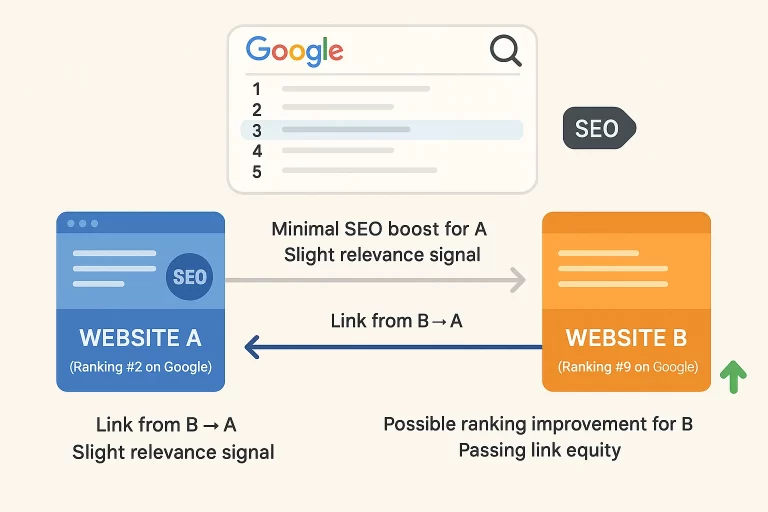
Can Linking Between Two Websites Ranking on Page 1 of Google Affect Their SEO Rankings?
Managing multiple websites that target the same keyword can feel like a high-stakes balancing act. If you own two websites—one ranking at #2 and another at #9 on Google’s first page—you might wonder whether linking them together could shake up their positions. Could a backlink from the lower-ranking site boost the higher-ranking one? Or could a link from the stronger site push the weaker one up the ranks? This article dives into the effects of cross-domain backlinks between two sites you own, exploring how they impact SEO rankings, whether one site could outrank the other, and the best practices for making this internal linking strategy work. Written for SEO professionals, marketers, webmasters, and bloggers, this guide simplifies the complexities of linking between owned websites and offers actionable insights to improve keyword rankings.
What Are Backlinks and Why Do They Matter in SEO?
Before we dive into the scenarios, let’s clarify what backlinks are. A backlink is a hyperlink from one website to another. In SEO, backlinks act like votes of confidence—when a reputable site links to yours, it signals to Google that your content is valuable and trustworthy. This is a core part of off-page SEO, which complements on-page SEO efforts like content quality and technical optimization.
Backlinks are a key Google ranking factor because they help search engines understand a website’s authority, relevance, and trustworthiness. However, not all backlinks are equal. Links from high-authority, relevant sites carry more weight than those from low-quality or unrelated sources. When you own two websites, you have a unique opportunity to experiment with an internal linking strategy, using cross-domain backlinks to potentially strengthen one or both sites. But does it always work, and how does it affect rankings? Let’s explore the two scenarios.
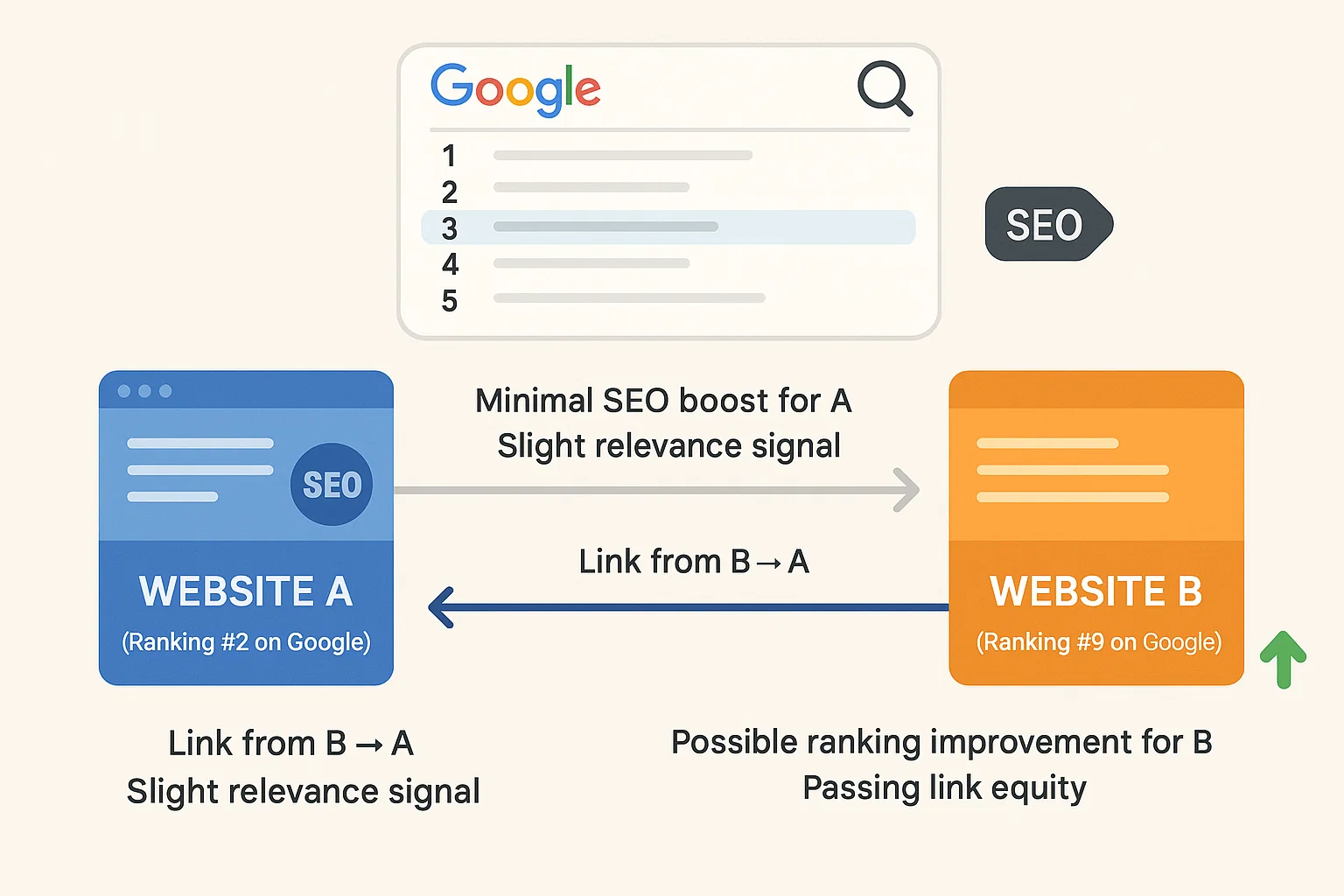
Scenario 1: Website B (Rank #9) Links to Website A (Rank #2)
Imagine your lower-ranking Website B, sitting at position #9, places a backlink to your high-performing Website A, which ranks at #2. What happens to their SEO rankings?
Minimal SEO Impact on Website A
A backlink from a lower-ranking site like Website B is unlikely to significantly boost Website A’s ranking. Since Website A is already at #2, it likely has a strong backlink profile, high-quality content, and solid engagement metrics. A single link from a less authoritative site (even one you own) won’t add much link equity—the SEO “juice” that passes authority from one site to another. Google evaluates the authority and relevance of the linking site, and a #9-ranked site carries less weight than, say, a link from a top-tier industry leader.
However, the link isn’t useless. If the backlink is contextual—meaning it’s placed within relevant content and makes sense to users—it can provide a slight boost to Website A’s trust and relevance for the target keyword. For example, if both sites cover digital marketing and Website B links to a detailed guide on Website A about “SEO strategies,” Google may see this as a small signal of topical authority.
Why Outbound Links Don’t Directly Improve Website B’s Rank
You might hope that linking from Website B to Website A could indirectly help Website B’s ranking. Unfortunately, outbound links (links pointing away from a site) don’t directly improve the linking site’s SEO. Google doesn’t reward a site for linking out, even to a high-ranking site like Website A. In fact, excessive outbound linking to unrelated or low-quality sites could dilute Website B’s authority, though a single relevant link to Website A is unlikely to harm it.
Possible User-Experience Benefits
While the SEO impact on Website B is minimal, linking to Website A can improve user experience. If visitors to Website B find the link to Website A’s high-quality content helpful, they may spend more time engaging with your ecosystem of sites. This could indirectly improve metrics like bounce rate or time on site, which are Google ranking factors. For example, if Website B’s blog post about “SEO tools” links to a comprehensive tool review on Website A, users get more value, and Google may notice the positive engagement signals.
Key Takeaway for Scenario 1
Linking from Website B to Website A has a limited direct SEO impact. Website A might gain a slight trust or relevance boost if the link is contextual, but Website B won’t see a direct ranking improvement. The real benefit lies in enhancing user experience and guiding visitors to your stronger site, potentially strengthening your overall brand presence.
Scenario 2: Website A (Rank #2) Links to Website B (Rank #9)
Now, let’s flip the script. What happens if Website A, your high-ranking site at #2, links to Website B, which lags at #9?
Website B Might Gain Ranking Strength
This scenario is more promising for Website B. A backlink from a high-ranking, authoritative site like Website A can pass link equity to Website B. Since Website A is already trusted by Google (as evidenced by its #2 ranking), its endorsement carries weight. This link signals to Google that Website B is also relevant and trustworthy for the shared keyword, potentially improving B’s ranking.
The strength of this boost depends on several factors:
-
Relevance: The link should fit naturally within Website A’s content. For instance, if Website A discusses “content marketing tips” and links to a related article on Website B, Google sees this as a relevant connection.
-
Anchor text: The clickable text of the link should include or relate to the target keyword. For example, using “best SEO practices” as anchor text for a link to Website B’s SEO guide can reinforce keyword relevance.
-
Link placement: A link embedded in the body of a high-quality article carries more weight than one in a footer or sidebar.
With a strong, relevant link from Website A, Website B could climb a few positions, especially if it’s already on Google’s first page.
Website A Doesn’t Lose Ranking (If Done Right)
A common concern is whether linking out from Website A could hurt its ranking. The good news? A single, relevant outbound link to Website B is unlikely to harm Website A. Google encourages natural linking to valuable resources, as it enhances user experience. In fact, linking to high-quality, relevant content (even on your own site) can reinforce Website A’s authority in its niche.
However, there’s a catch. If Website A links to Website B excessively or in a spammy way—say, with unnatural anchor text or irrelevant content—Google might view it as manipulative. This could raise red flags and potentially harm both sites. Stick to natural, user-focused linking to avoid any penalties.
When Linking from A to B Is a Smart Move
Linking from Website A to Website B makes sense in specific cases:
-
Content synergy: If Website B offers unique, high-quality content that complements Website A, the link adds value for users. For example, Website A might focus on broad SEO strategies, while Website B dives into niche topics like local SEO.
-
Strategic growth: If you’re prioritizing Website B’s growth (perhaps it’s a newer site with untapped potential), a link from Website A can give it a head start.
-
User journey: If the link guides users to a logical next step, like a tool, case study, or deeper guide on Website B, it enhances the user experience and keeps visitors within your ecosystem.
Key Takeaway for Scenario 2
A backlink from Website A to Website B can provide a meaningful SEO boost to the lower-ranking site, thanks to link equity from a high-authority source. Website A is unlikely to lose its ranking if the link is relevant and user-focused. This strategy works best when the link aligns with content goals and enhances the user journey.
Can Website B Eventually Outrank Website A?
Could Website B, starting at #9, overtake Website A’s #2 spot just because of a backlink? The short answer is: it’s possible, but the backlink alone won’t do it. Rankings depend on a combination of factors, and a single link is just one piece of the puzzle. For Website B to outrank Website A, it needs to excel in several areas:
Backlink Quality and Quantity
While the link from Website A helps, Website B needs a robust backlink profile to compete at the top. This means earning links from other authoritative, relevant sites. If Website B attracts high-quality backlinks from external sources (e.g., industry blogs, news sites, or partners), it can close the gap with Website A.
Content Relevance and User Experience
Content is king in SEO. Website B must offer content that’s more relevant, comprehensive, and engaging than Website A’s for the target keyword. This includes:
-
Depth: Detailed, well-researched articles or guides that answer user queries better than competitors.
-
Freshness: Regularly updated content to stay relevant to Google’s algorithms.
-
User experience: Fast-loading pages, mobile optimization, and intuitive navigation to keep visitors engaged.
If Website B’s content outshines Website A’s, the backlink from A becomes a bonus rather than the main driver.
Engagement Signals
Google tracks how users interact with your site. Key engagement metrics include:
-
Click-through rate (CTR): If Website B’s search result snippet is more compelling, it may attract more clicks than Website A.
-
Bounce rate: If users stay on Website B longer and explore multiple pages, Google sees it as a positive signal.
-
Dwell time: The longer users spend on Website B, the more Google perceives it as valuable.
Improving these metrics can help Website B climb higher, especially if Website A’s engagement starts to slip.
Technical SEO and On-Page Optimization
Website B must nail technical SEO and on-page optimization to compete with a top-ranking site like Website A. This includes:
-
Site speed: Faster load times improve user experience and rankings.
-
Keyword optimization: Using the target keyword naturally in titles, headers, and content.
-
Internal linking: Creating a strong internal linking structure within Website B to distribute link equity across its pages.
-
Mobile-friendliness: Ensuring the site performs well on all devices.
If Website B outperforms Website A in these areas, it has a real shot at climbing the rankings, with or without the backlink.
The Role of the Backlink
The backlink from Website A is a helpful nudge, but it’s not a magic bullet. It contributes to Website B’s authority and relevance, but without improvements in content, engagement, and technical SEO, it won’t push B past A. Think of the backlink as a catalyst—it amplifies Website B’s potential but doesn’t replace the need for a holistic SEO strategy.
Best Practices for Internal Linking Between Two Sites
To make the most of cross-domain backlinks between Website A and Website B, follow these best practices to ensure your internal linking strategy is effective and safe:
1. Ensure Contextual Placement of Links
Links should feel natural and relevant to the content. For example, if Website A has a blog post about “SEO trends in 2025,” it could link to a related case study on Website B about “SEO success stories.” Contextual links are more valuable to users and Google, as they enhance the content’s usefulness.
2. Use Natural Anchor Text
Choose anchor text that flows naturally and describes the linked content. Avoid over-optimized or spammy anchor text like “best SEO services click here.” Instead, use descriptive phrases like “learn more about SEO strategies” or “explore our SEO case studies.” This aligns with Google’s guidelines and reduces the risk of penalties.
3. Avoid Excessive Cross-Linking or Spammy Practices
Linking too frequently between your sites can look manipulative to Google, especially if the links are low-quality or irrelevant. Stick to one or two meaningful links per page, and ensure they add value for users. Avoid tactics like link farms or excessive reciprocal linking, which can trigger Google’s spam filters.
4. Monitor User Behavior After Linking
Use tools like Google Analytics to track how users interact with your links. Are visitors clicking from Website A to Website B? Do they stay on Website B or bounce back quickly? Positive user behavior (e.g., longer dwell time, lower bounce rate) signals to Google that the link is valuable, which can indirectly boost rankings.
5. Keep Both Sites’ Content Regularly Updated
Fresh, high-quality content is critical for maintaining and improving rankings. Ensure both Website A and Website B regularly publish new content or update existing pages to stay relevant. Outdated content can weaken a site’s authority, even with strong backlinks.
6. Diversify Your SEO Strategy
Relying solely on cross-domain backlinks is risky. Both sites should pursue a balanced SEO approach, including:
-
Off-page SEO: Build external backlinks from reputable sites.
-
On-page SEO: Optimize content, meta tags, and images for the target keyword.
-
Technical SEO: Ensure fast load times, secure connections (HTTPS), and mobile optimization.
-
User engagement: Create compelling content that drives clicks, shares, and time on site.
By combining these efforts, your internal linking strategy becomes part of a broader plan to improve keyword rankings.
Conclusion
Linking between two websites you own can be a powerful tool in your SEO arsenal, but it’s not a silver bullet. When Website B (#9) links to Website A (#2), the impact on A’s ranking is minimal, though it can enhance user experience and slightly boost trust. Conversely, when Website A links to Website B, the lower-ranking site may gain valuable link equity, potentially improving its position if supported by strong content and optimization. However, for Website B to outrank Website A, it needs to surpass A in backlink quality, content relevance, engagement signals, and technical SEO—not just rely on a single link.
By following best practices like contextual linking, natural anchor text, and user-focused strategies, you can leverage cross-domain backlinks to strengthen both sites without risking penalties. Ultimately, the real SEO impact comes from a holistic approach that combines internal linking with robust on-page and off-page SEO efforts. With smart planning, your websites can climb the rankings together, maximizing their visibility for your target keyword.